£7.99
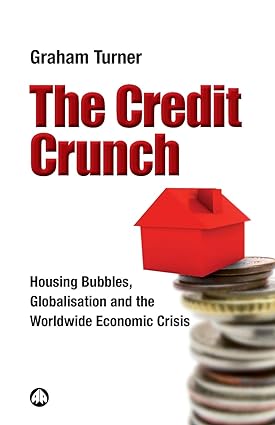
This book argues that the current financial turmoil signals a crisis in globalisation that will directly challenge the free market economic model. Graham Turner shows that the housing bubbles in the West were deliberately created to mask the damage inflicted by companies shifting production abroad in an attempt to boost profits.
As these bubbles burst, economic growth in many developed countries will inevitably tumble. The Japanese crisis of the 1990s shows that banks and governments may struggle to contain the fallout. The problem has not been limited to the US, UK and Europe: housing bubbles have become endemic across wide swathes of emerging market economies.
As the West slides, these countries will see an implosion of their credit bubbles too, shaking their faith in the free market. Turner is an experienced and successful economic forecaster, whose opinions are sought by large international banks and top financial journalists.
Drawing from his first hand experience of the Japanese property crash of the 1990s, he presents his analysis in a clear and persuasive style, showing that the end of housing market growth spells disaster for neoliberal globalisation.